



Microsoft environments continue to grow in size and complexity. Active Directory, Microsoft Entra ID, Microsoft 365, Intune, Teams, and Exchange Online are deeply connected, while AI agents, service principals, applications, and automated accounts add an expanding layer of nonhuman identity.
Protector brings continuous, agentless monitoring across these services and identities into one place. It shows who or what made a change, what changed, when it happened, and where it originated. Support for multi-domain, multi-forest, and multi-tenant environments gives teams a centralized view of activity and potential threats.
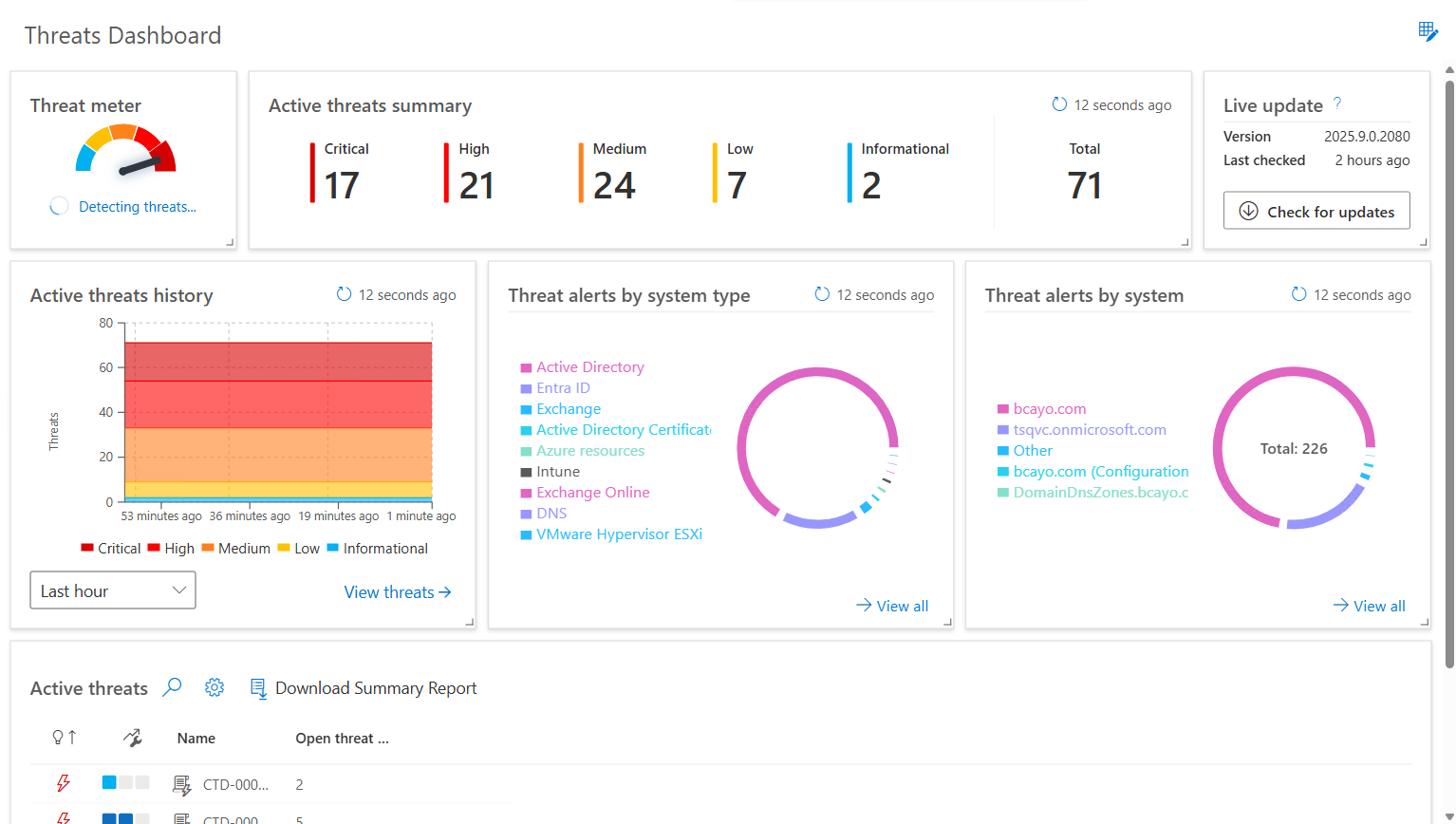
Guardian Protector launched with 179 built-in threat signatures. One year later, the revamped library includes 213 threat signatures covering more than 300 detections. New and updated signatures are delivered automatically into the product, helping protection keep pace as identity risks evolve.
Along the way, we added detections that reflect how quickly the identity attack surface is changing. These signatures go beyond well-known indicators to identify emerging risks across human and non-human identities, cloud applications, authentication activity, certificate services, and endpoint administration. Each detection is designed to help teams recognize conditions that attackers can exploit, understand why the activity matters, and investigate before a weakness becomes an incident.

Here are a few recent additions:
- Microsoft Entra ID agent identity with no active owner
This threat signature detects a Microsoft Entra ID agent identity that has no assigned active owner. An owner whose account is disabled cannot sign in, review the agent’s permissions, validate its ongoing business purpose, or respond to an alert involving it. When every assigned owner is disabled, the agent is effectively unowned, creating a governance gap that can allow excessive permissions, stale access, or suspicious activity to persist without accountable oversight.
- Microsoft Entra ID account enumeration via unknown OAuth client IDs
This threat signature detects Microsoft Entra ID authentication requests that specify an OAuth client ID with no corresponding application registration or service principal in the tenant. Without application metadata such as a recognized name, owner, permissions, and expected sign-in behavior, defenders have less context for determining whether the request is legitimate. Attackers can use unknown or fabricated client IDs during account enumeration and other authentication probing, while detections that depend on known application identifiers or successful sign-ins may overlook the activity.
- Active Directory Certificate Services auditing not configured
This threat signature detects an Active Directory Certificate Services (AD CS) deployment where Certificate Services auditing is not configured. Without this auditing, security teams may lack the event data needed to identify certificate requests, issuance activity, configuration changes, and other actions that can support privilege escalation or persistence. Detecting the gap helps organizations restore the visibility required to investigate certificate-based attacks and validate that sensitive CA activity is being recorded.
- Microsoft Intune Multi Admin Approval access policies not configured
This threat signature detects an Intune tenant where no Multi Admin Approval access policies are configured. Without approval requirements, a single administrator may be able to perform sensitive changes without independent review, increasing the impact of a compromised account, malicious insider, or simple administrative error. The detection highlights where organizations can add separation of duties and an additional control before high-impact Intune actions are completed.
The public Cayosoft Threat Directory shares that knowledge with the broader community, explaining what each threat means, why it matters, and what administrators can do next.