





Identity is one of the main ways attackers gain a foothold. Mismanaged access, especially in the areas of privileged accounts and sensitive applications, turns into real incidents and real findings in audits. An identity governance framework that lives in isolation, disconnected from the formal risk and compliance function, will always be incomplete.
The starting point is to understand where identity‑related risk is concentrated. In most organizations, a relatively small set of systems and accounts carries the majority of the risk. Once these are identified, identity governance can be designed as a set of controls that address concrete risk scenarios. For example, if one risk scenario is that a dormant privileged account might be exploited, the framework should describe which controls mitigate it. Those might include:
- Automatic disabling of accounts shortly after HR marks someone as terminated
- Regular reporting on inactive admin accounts
- Periodic access reviews focused on privileged users
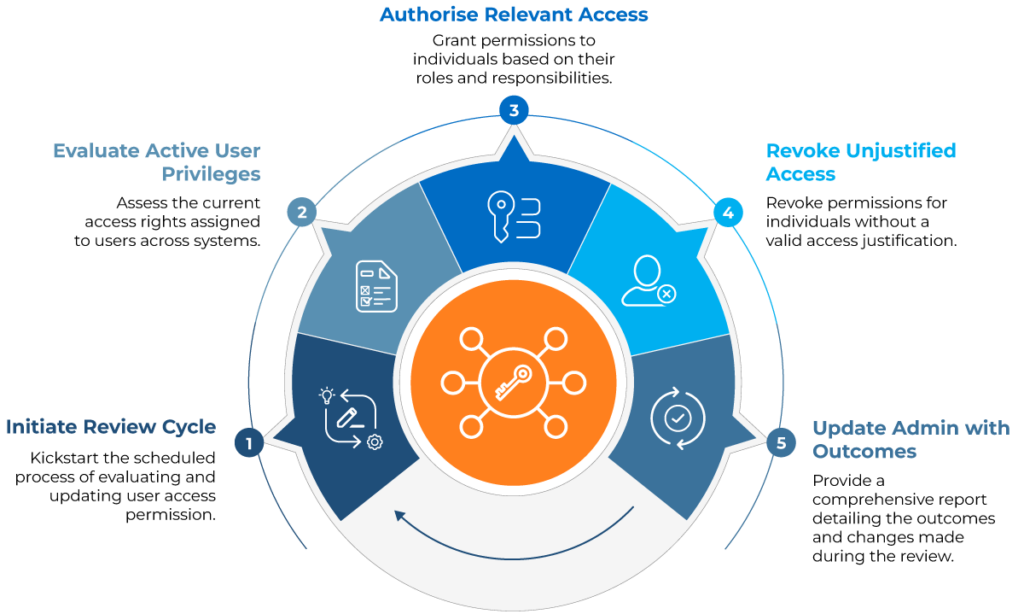
An example image of a user’s access review cycle (source)
For risks like a single user both creating and paying vendors in the financial system, the framework should specify segregation‑of‑duties rules that prevent the user from holding both entitlements unless there is an approved, time‑bound exception.
The regulatory landscape is, as a result, shifting toward stricter requirements for identity accountability. Standards such as ISO/IEC 27001, NIST SP 800‑53, and NIST SP 800‑63 assume that organizations can show, at any point, who has access to what, who approved it, and when those entitlements changed. They also expect evidence of regular access reviews and of controls regarding privileged accounts and sensitive data. If these expectations are not built directly into the everyday processes of identity governance, teams end up scrambling during audits, trying to stitch together an incomplete picture from log files and aging spreadsheets.
Every identity passes through a series of stages: People join the organization, change roles or departments, take leaves of absence, rejoin the organization, and eventually leave. The same is true for non‑human identities, such as service accounts and automated integrations, which may be created for specific projects and later be forgotten. Most identity‑related incidents and audit findings trace back, in one way or another, to failures in these lifecycle transitions.
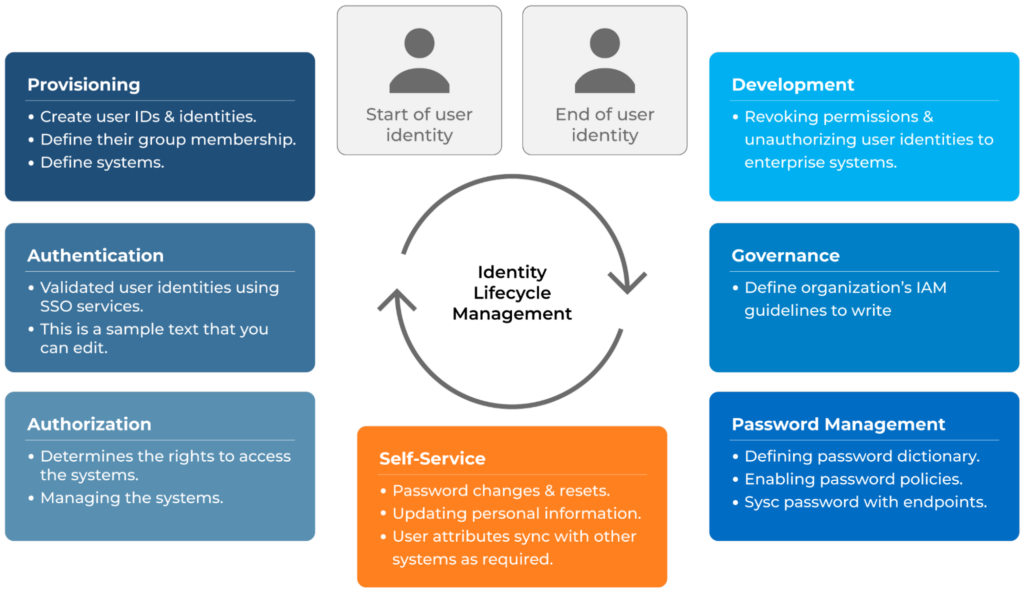
A typical identity lifecycle process diagram that most organizations follow (source)
Because most security and audit failures trace back to unresolved lifecycle changes, the joiner-mover-leaver model (JML) is the usual way to structure and govern these transitions.
- For joiners, the framework should specify which system acts as the authoritative source for new identities: typically HR for employees, a vendor management system for contractors, and an identity provider or directory for some categories of external users. When a new record appears in that system, the identity governance processes are triggered. An account is created in the directory or identity provider, baseline access (such as to email and collaboration tools) is granted, and role‑specific access is assigned based on job function, department, and location. Done well, this ensures that new employees arrive on the first day with the right access in place and without a flurry of manual tickets.
- Movers are more subtle but often more dangerous. When someone changes departments, locations, or roles, new access must be granted to support the new responsibilities, and old access must be reviewed and removed where no longer needed. Many organizations are good at the first part and poor at the second, which leads to cumulative privilege creep. A mature identity governance framework will describe which kinds of changes in HR or directory attributes should trigger a mover workflow, and it will specify that entitlements not justified by the new role must either be removed or explicitly renewed as an exception.
- Leavers require particularly prompt action. The framework should make it clear that HR termination events are the authoritative signal to begin deprovisioning. Accounts should be locked or disabled quickly (especially high‑risk ones), and access to applications and data should be removed in an orderly fashion. For certain roles, such as system administrators or senior executives, termination may also need to trigger additional monitoring and review to detect suspicious activity related to the departure.
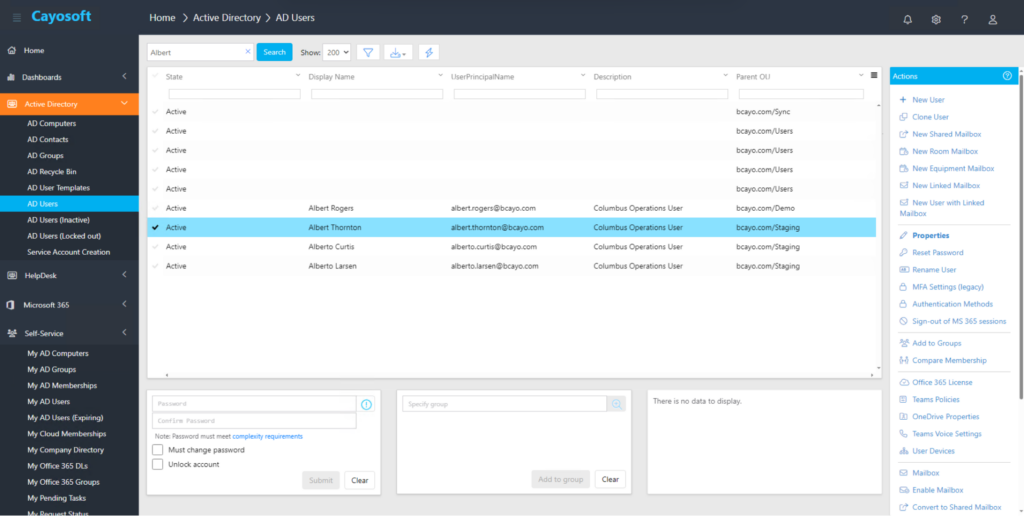
An example solution used for identity and governance administration (source)
A robust framework also explicitly addresses edge cases. For example, an employee returning from a brief leave of absence might have his or her previous access restored automatically, whereas a rehire after a long gap could be treated as a fresh joiner, with access reassigned according to current policies.
Once lifecycle events determine when access should change, the framework should follow automated access modeling to decide what that access should be at each point.
Role and access modeling sets how entitlements are structured, assigned, and managed across the organization. This part of the governance framework turns business functions into standard access models that support least privilege and reduce unnecessary differences. Well-designed roles make sure that access is assigned consistently, lower the risk of privilege creep, and make governance easier across large identity systems.
Role hierarchies help organizations match job functions to clear access needs. These hierarchies usually include basic access for general users, special access for certain teams, and higher access for administrators. When roles are based on business needs instead of individual requests, entitlement sprawl goes down, and access provisioning becomes faster and more reliable. In Identity Governance and Administration (IGA) practices, role-based access control (RBAC) is key to standardizing access.
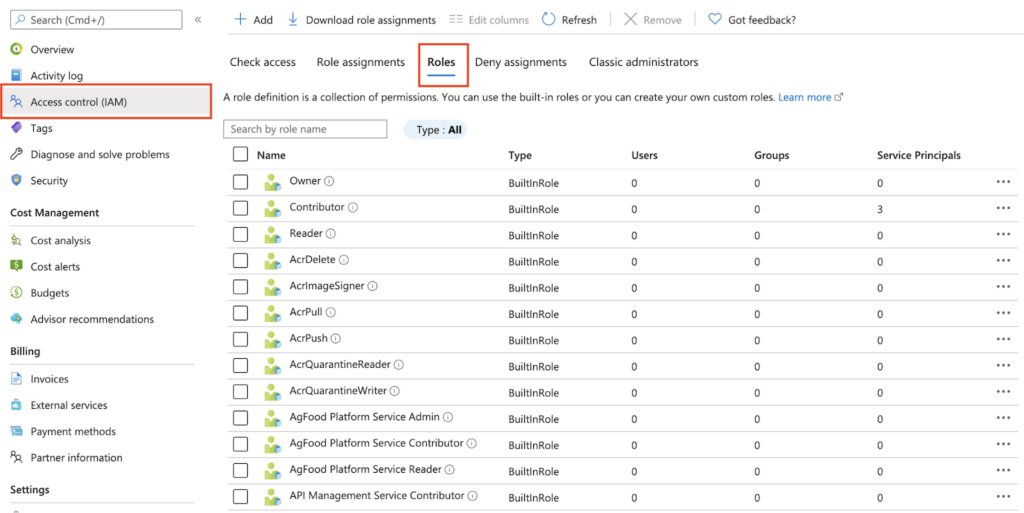
Example Azure IAM Roles for role-based access control. (source)
No matter how careful the initial design, roles change over time. If roles are never revisited, they slowly drift away from their original intent and pick up extra permissions along the way. To counter this, a mature framework includes a role recertification process. On a regular schedule—perhaps annually for standard roles and more frequently for high‑risk ones—the designated role owner reviews both the definition of the role and the list of people assigned to it. That individual confirms that the entitlements are still appropriate and that each assignee still needs the role. If not, the role is adjusted, and assignments are pruned.
In most organizations, each critical application should have a clearly identified system owner, usually on the business side, who is accountable for deciding who should have access and in what capacity. Similarly, roles should have named owners who approve changes to the role definitions and decide who participates in periodic recertification. Security and risk teams provide oversight, setting minimum standards and reviewing how well identity controls are functioning, but they do not necessarily own every access decision.
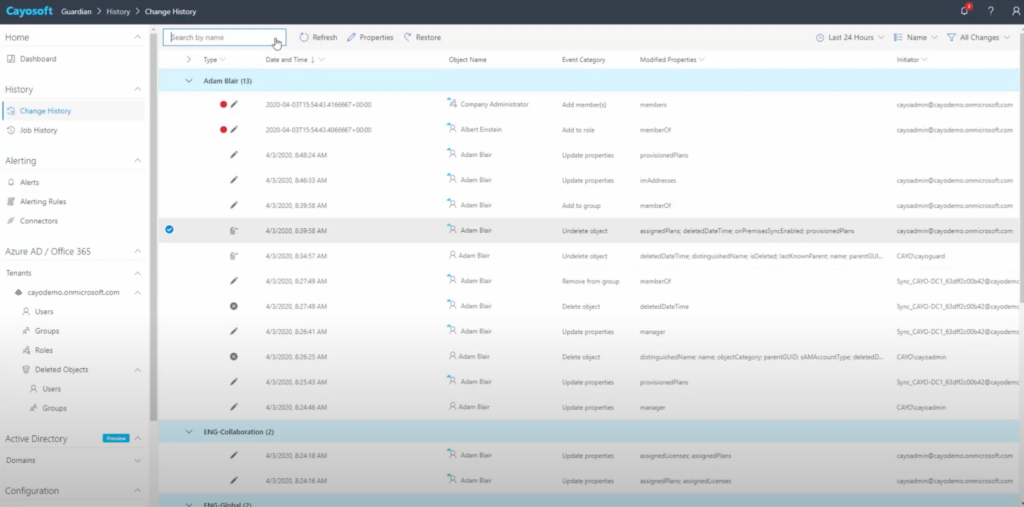
Example of Cayosoft Guardian’s logging and auditing system (source)
A simple way to make responsibilities explicit is to document them using a RACI‑style model for key activities:
- Who is responsible for granting access to a high‑risk application
- Who is accountable if something goes wrong
- Who must be consulted when policies change
- Who should be informed of major incidents or findings
Visibility is important, too. Dashboards provide visual information that makes it easier to spot irregularities in identity usage trends. They enable the quick identification of unusual authorization changes, access from unexpected locations, and irregular login times.
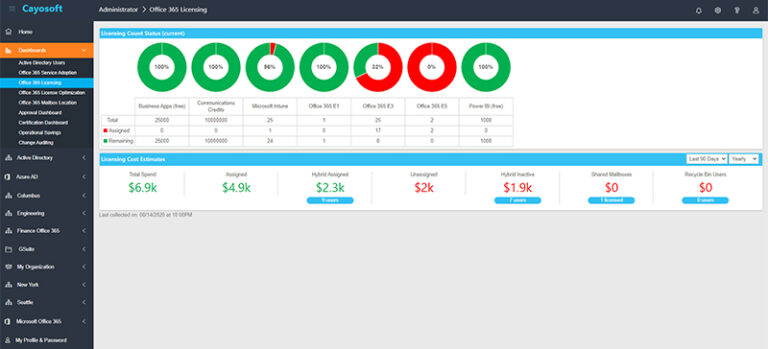
Example of Cayosoft Administrator’s dashboarding system (source)
The framework should also help identify which metrics matter. These might include the percentage of new joiners provisioned by their first day, the average time taken to deprovision leavers in critical systems, the number of orphaned accounts discovered in each review cycle, or the completion rates of scheduled access reviews. Over time, such metrics make it possible to judge whether identity governance is becoming more effective or simply more complicated.
This is the best known standard for information security management systems (ISMS), defining the requirements that an ISMS must meet. The standard provides companies of any size and from all sectors of activity with guidance for establishing, implementing, maintaining and continually improving an information security management system.
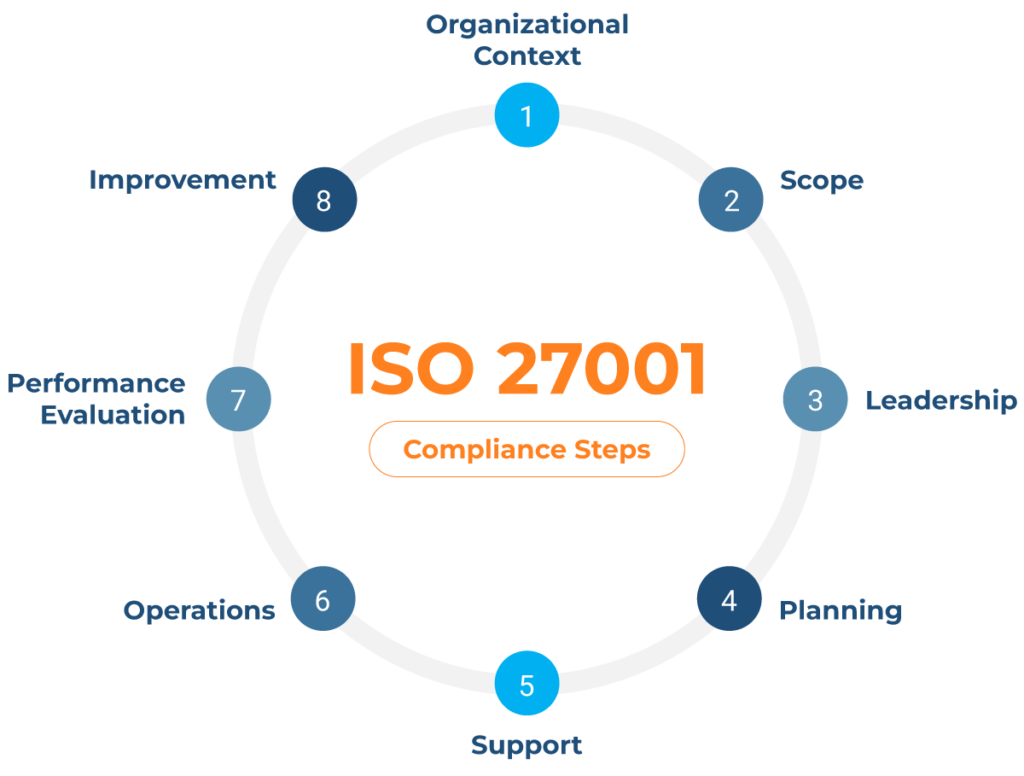
ISO 27001 framework components (source)
Conformity with ISO/IEC 27001 means that an organization has put in place a system to manage risks related to the security of data owned or handled by the company and that this system follows all the best practices and principles outlined by the framework. This standardization also makes audits more predictable and promotes consistent expectations across departments and regions.
CSF provides guidance to industry, government agencies, and other organizations that focuses on managing cybersecurity risks. It offers a taxonomy of high-level cybersecurity outcomes that can be used by any organization—regardless of its size, sector, or maturity—to better understand, assess, prioritize, and communicate its cybersecurity efforts. The CSF does not prescribe how outcomes should be achieved. Rather, it links to online resources that provide additional guidance on practices and controls that could be used to achieve those outcomes.
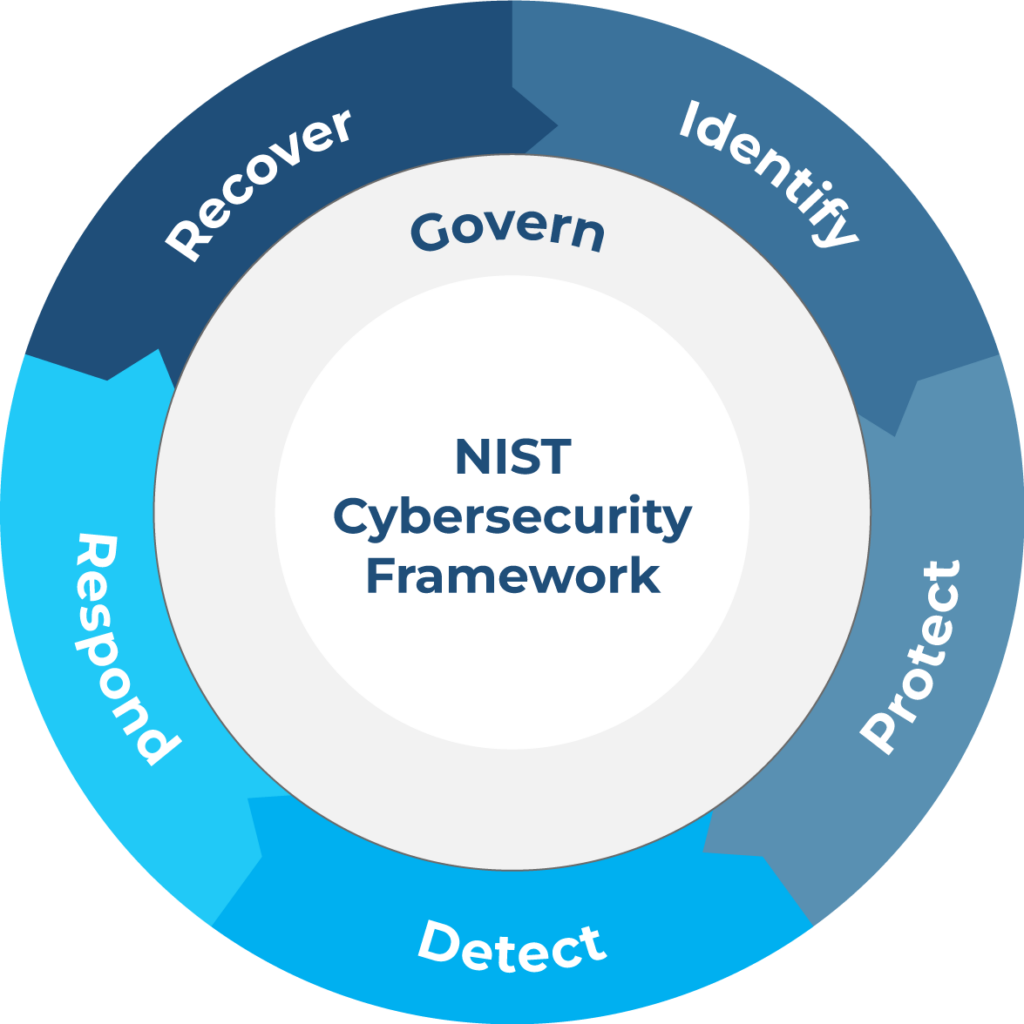
NIST CSF new version 2.0 framework model (source)